Search Society Blog

Friday, September 14, 2012

October 11th — The Last Battle

On October 11th the C.S. Lewis Society of Harrisonburg will meet to discuss the 7th book in C.S. Lewis's popular Chronicles of Narnia series, The Last Battle.  The meeting will be at 7:30 p.m. at the Harrisonburg Barnes and Noble and our discussion leader will be Dr. Iain Maclean.

Members of the society often meet for a light dinner at Panera's shortly after six p.m. on the day of the meeting.  If you drop in at Panera's you'll likely be able to tell who the Lewisians are ... and if not just ask and you'll find us.


Discussion Questions for "The Last Battle"
1.  Do you see specific parallels between events in the LB and eschatology as described in the Christian Scriptures?
2.  Which  characters  do you relate with and why?
3.  Who are the dwarfs?
4.  Do you agree or disagree with the judgments executed upon the characters in the LB?
5.  Why does Lewis include all the CN characters in this volume (except Susan, of course)?
6.  Aslan permits Emeth into the new Narnia. What does this imply or mean?
7. Is the new Narnia attractive or not? Why or why not?
8. Puzzle and the Shift live out in an isolated place.  Would Shift have had
that degree of power if they had not been isolated?  This one is totally
out from left field---is Lewis saying anything about isolation and
community, and the dangers of each?
9. I was thinking about the ending to the Lord of the Rings and the ending to
this.  Both stories have an ending of an age/era/world but they are very
different.  Do you get the same feeling about the elves ending their
sojourn and leaving Middle Earth as you do about, basically  all the good
guys dying off in this world, as well as the loss of the old Narnia?
  

If you want to receive emails about the meetings and get the discussion questions by email just send a quick note with your email address and name to rschneid@bridgewater.edu

Sunday, August 12, 2012

September 13th is Chesterton's Father Brown

In September we're going to read one of G.K. Chesterton's Father Brown stories. Chesterton was a profound influence on C.S. Lewis who I think likely read everything Chesterton wrote. He certainly read "The Everlasting Man" and much more. In his autobiographical work "Surprised by Joy" Lewis said while still an atheist of Chesterton "... strange as it may seem, I liked him for his goodness." He also liked him for "...a general tone of flippancy and jocularity, but the humor which is not in any way separable from the argument but is rather (as Aristotle would say) the 'bloom' on dialectic itself."

Join us in September by reading the Father Brown story "The Chief Mourner of Marne" which can be found HERE. It is a quick and enjoyable read. If you do enjoy it you might consider getting one of the Father Brown complete collections which will provide much more enjoyment.

Monday, August 6, 2012

August 9th Discussion Questions

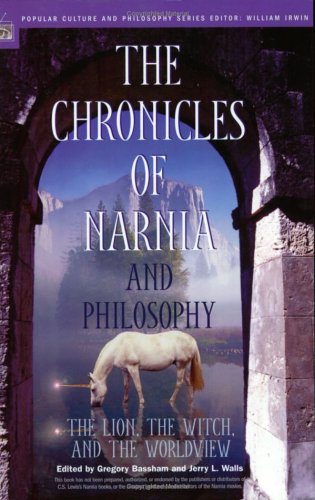
Jane will be leading our discussion on Thursday August 9th at Barnes and Noble in Harrisonburg on The Chronicles of Narnia and Philosophy, subtitled The Lion, The Witch, and The Worldview edited by Gregory Bassham and Jerry L. Walls.  Here are the discussion questions:

Narnia and the Enchantment of Philosophy
Part I. Farewell to Shadow Lands: Believing, Doubting and Knowing
Chapter 1. Aslan’s Voice: C.S. Lewis and the Magic of Sound
          On page 5, the last sentence under the subtitle “Sound Sense” states “Remarkably, Lewis gives sound, not sight, the fundamental role to play in the construction of knowledge.” Do you agree or disagree with this statement? Why?

Chapter 2. Virtue Epistemology: Why Uncle Andrew Couldn’t Hear the Animals Speak
          The author posits four intellectual virtues necessary to being a responsible seeker of truth:
                   1.)Valuing truth for its own sake
                   2.) Refusing to believe something just because one wants it to be true
                   3.) Not allowing one’s fears to dictate what one believes
                   4.) Recognizing one’s own limitations as a seeker of truth.
The author argues that Uncle Andrew is lacking in all 4 of these intellectual virtues. In which virtue is Uncle Andrew the most lacking? The least lacking?

Chapter 3. Trusting Lucy: Believing the incredible
          When Lucy first tells her siblings about her experiences in Narnia in The Lion, the Witch and the Wardrobe, Peter and Susan conclude that Lucy is either lying or she has lost her mind. The professor suggests a third option to Peter and Susan: that Lucy is telling the truth. This turns out to be the case. Given their experiences, are Peter and Susan justified in not believing Lucy when she is able to see Aslan in Prince Caspian, but the rest cannot?

Chapter 4. Breaking the Spell of Skepticism: Puddleglum vs. the Green Witch
          What is it that we lose when we compare things that are similar? What do we gain?

Chapter 5. At Any Rate there’s No Humbug Here: Truth and Perspective
          “We find in Lewis a clear rejection of this search for certitude and objectivity. Three themes supporting this claim run through his Narnian stories. First, knowledge is perspectival; second, knowledge is value-laden; and finally, knowledge is personal.  We will consider each in turn.” (p.55)
The author states that the dichotomy between value-free objectivity and value-laden subjectivity is false. (Page 61.) Do you agree or disagree? Why?

Part II: The Tao in Narnia: Morality and the Good life
Chapter 6. Worth Dying For: Narnian lessons on Heroism and Altruism
          Garcia, the author, states, “ ‘Death before dishonor’ no longer sounds as compelling as it once did.” Do you agree or disagree? Why or why not?

          Garcia (p. 75) states, “We define ourselves to a great extent by our actions and that we often act in order to maintain our sense of identity…would such a desire explain the actions of Eustace, Shasta, Jill and Digory?

Chapter 7. Work, Vocation and the Good Life in Narnia
          “By having Eustace grow and develop from someone who at first cares only about his own pleasure, Lewis suggest that this pleasure seeking state is an immature one.” (page 83) What else is Lewis suggesting by the development of Eustace’s character?

Chapter 8. The Tao of Narnia
          How would you compare this chapter to the first chapter of “Mere Christianity?” On what points do they differ? How would you compare this chapter to “The Abolition of Man?” Is there on overall morality? A tao?

Chapter 9. Extreme Makeover:  Moral Education and the Encounter with Aslan
          “Narnia is the remedy for their (the children’s) moral shortcomings. And Lewis, drawing on a classical moral framework rooted on both ancient Greek philosophy and Christian principles, wants us to see that our own moral development needs what they found in Narnia.” (Page 106) What did the children find in Narnia that remedied their moral short comings? Who do the children meet who embodies a greater development of morality?

Chapter 10. Is it Good to be Bad?  Immoralism in Narnia
          What critiques does Lewis make of immoralism according to this chapter? Does Lewis use other critiques in the Chronicles not mentioned in this chapter?  If so, what are they?

Chapter 11. Narnia and the Moral Imagination
          Why are we fascinated with type 3 characters? The author states that we want to understand what makes these characters so bad. (Page 135) Is there more to it than that? What is it about Peter, Caspian and Reepicheep that make them so much more attractive than Rabadash, Uncle Andrew or Shift?

Chapter 12. Beasts, Heroes and Monsters: Configuring the Moral Imaginary
          “The tales that we share with our youngsters not only reflect our deepest cultural and ethical traditions; they also feed the mythic imagination of the young, and help to shape their value systems in ways that remain doggedly faithful to the traditional beliefs of the group.” (Page 143) Agree or disagree?

Chapter 13. No Longer a Friend of Narnia: Gender in Narnia
          Fry argues that the development of Susan’s character is a subtle attack on femininity. Could one not just as effectively argue that Lewis was a product of his time in regards to his treatment of the female characters?  What kind of adventure story could one get with the women all engaged in “feminine” activities? Name a classic adventure novel with a “feminine” protagonist.

Part III. Further Up and further In: Exploring the Deeper Nature of Reality
Chapter 14. Plato in Narnia
          Is Digory meant to be a figure out of one of Plato’s dialogues?
          Is the Professor in “The Lion, the Witch and the Wardrobe” meant to be a Socrates figure?

Chapter 15. Different Worlds, Different Bodies: Personal Identity in Narnia
          What creates identity? Do you agree with the author’s postulation that identity involves a sense of “I”-ness? Does identity require a body?

Chapter 16. Why Eustace Almost Deserved His Name: Lewis’ Critique of Modern Secularism
          Mengue: Lewis argues that the secularization of education leads to a built-in bias against the transcendent. How might this bias have been influenced by Lewis’ own experience at school? (p 196)

          Mengue: By “liberating” human beings from God, modern secularism allows the strong to enslave the weak for amoral purposes. How does this fit in with ancient and more transcendent cultures using slaves? (p199)

Chapter 17. Time Keeps on ticking, Or Does It?  The Significance of Time in The Chronicles of Narnia
          How can everlastingness (God is through time in order to be a personal agent) and timelessness (God is not in Time. God experiences all history at once) be reconciled? How can the timelessness theory be reconciled with God as a personal agent?

Part IV. The Deepest Magic: Religion and the Transcendent
Chapter 18. Aslan the Terrible: Painful Encounters with Absolute Goodness
          Do goodness and terribleness lie at the core of all genuine religious experience?

Chapter 19.Worthy of a Better God: Religious Diversity and Salvation in the Chronicles of Narnia
Sennett argues that Lewis is an inclusivist which is defined as believing that there is only one true religion, but a person may be saved without explicitly practicing or even knowing about that religion.

Wouldn’t believing this cut down on what I view as the “marketing of Christianity”? The race to see how many people can get saved and pulled in the door of various churches. Worshiptainment would also come into play here. Maybe if so many Christians weren’t busy with marketing, they could actually experience growth themselves and disciple others.

Chapter 20. The Atonement in Narnia
          Taliaferro & Traughber address Lucas’ 4 major criticisms of the Ransom Theory. Lucas first criticizes the ransom theory as it requires a literal belief in Satan. Taliaferro & Traughber argue that “Satan” can be treated as a metaphor for the binding power of evil. Is this an effective argument to make the Ransom theory plausible?

          Lucas’ third objection is that there is something religiously and morally repugnant in picturing God working out a deal with Satan. (Page 256) Would the book of Job not refute this?

Chapter 21. The Green Witch and the Great Debate: Freeing Narnia from the Spell of the Lewis-Anscombe Legend
          Are The Chronicles of Narnia a departure from apologetics for Lewis or another way of saying the same things?

Chapter 22. Some Dogs Go to Heaven: Lewis on Animal Salvation
          Lewis argues that animals are “sentient” which he defines as capable of sensing and feeling, but not “conscious” defined as having a mind or a soul that is capable of experiencing their sensations and feelings as a connected series. (p281) Do you agree or disagree with this? Why?


Friday, July 27, 2012

The Lion Awakes ...


SEE HERE Before Narnia and before Middle Earth a friendship was forged and it changed everything!

Sunday, July 15, 2012

The Chronicles of Narnia and Philosophy — Our Book for August 9th

On August 9th the C.S. Lewis Society of Harrisonburg will be reading The Chronicles of Narnia and Philosophy, subtitled The Lion, The Witch, and The Worldview edited by Gregory Bassham and Jerry L. Walls.  It's a 285 page book divided into four sections.  Each section is composed of several essays by a wide variety of C.S. Lewis scholars.  Our discussion of The Chronicles of Narnia and Philosophy will be led by Jane.

The four sections of the book are:

Part I: Farewell to Shadowlands: Believing, Doubting, and Knowing

Part II: The Tao in Narnia: Morality and the Good Life

Part III: Further Up and Further In; Exploring the Deeper Nature of Reality, and

Part IV: The Deepest Magic: Religion and the Transcendent

You can pick up the book from Barnes and Noble (SEE HERE) or Amazon (SEE HERE)

The C.S. Lewis Society of Harrisonburg meets on the second Thursday of each month at 7:30 p.m. at the Barnes and Noble in Harrisonburg at a little reading nook set up by the philosophy books just outside the DVD section of the story.  You don't have to have read the book to join in the discussion but of course it helps.  Everyone that is interested in C.S. Lewis and his friends, the Inkings, is very welcome.

Saturday, June 16, 2012

At the Back of the North Wind— for July 12th

C. S. Lewis said of George MacDonald, "I have never concealed the fact that I regarded him as my master; indeed I fancy I have never written a book in which I did not quote from him."

Lewis describes the impact that MacDonald's book Phantastes had on him in his autobiography, Surprised by Joy.  Lewis acknowledged his debt in MacDonald in many ways.  For example he edited an anthology of quotations from MacDonald. (George MacDonald An Anthology)

The C.S. Lewis Society of Harrisonburg meets the second Thursday of each month at the Harrisonburg Barnes and Noble at 7:30 p.m.  The meetings run no longer than an hour and a half.

Our discussion leader for the July meeting will be Elizabeth.  Some people coming to the meeting have a light dinner or a snack at Panera's a bit after six on the evening of the meetings.  If you wish to get emails reminding you of the meetings and sending around the discussion questions ahead of time then just send an email to schneirj@comcast.net.

Discussion Questions Below:

At the Back of the North Wind by George MacDonald

In Greek mythology, the Hyperboreans were a mythical people who lived far to the north of Thrace. The Greeks thought that Boreas, the North Wind, lived in Thrace; therefore, Hyperborea was “back of the north wind” It was considered a perfect land with the sun shinning twenty-four hours a day. Herodotus is the earliest source that mentions Hyperborea in detail. Other works also refer to Hyperborea. Hyperborea was identified with Britain as early as the 4th century B.C. Both Greeks and Romans claimed Hyperborea was a land of complete happiness.

Questions: There are so many dimensions to this book we may want to start with #7

1. When reading this I kept thinking of the theme “Things are not always what they seem”. What did you consider the theme of this book and why?

2. North Wind says she has many names, (Chapter 36) like Bad Fortune, Evil Chance, or Ruin. What other names do you think would fit her or show her real nature?

3. What do you think is the purpose of the visits of the North Wind in the first part of the book? Why does the North Wind visit very little in the second part of the book?

4. In chapter 36 Diamond Questions North Wind, Diamond asks North Wind an important question: How am I to know that you (and all experiences connected with you) are not a dream? What do you think North Wind is trying to say in her responses?

5. Dreams are very important. What role do they play in the book and in our lives? Do you think that MacDonald is just talking about the dreams we have when we are asleep? What do you think of Nanny’s dream?

6. Trust, truth and honesty are the values “back of the North Wind”. What happens when Diamond lives out these values in the “real” world?

7. What in the book spoke to you?

Saturday, May 19, 2012

The Abolition of Man — Is Our Book for the June 14th Meeting

C. S. Lewis delivered the Riddell Memorial Lectures, a series of three evening lectures at King's College, Newcastle, part of the University of Durham, on February 24-26, 1943.  These were combined to form The Abolition of Man.

The last novel in the Space Trilogy, That Hideous Strength, Lewis described as the fictional form of the ideas he presents in The Abolition of Man.  So it is appropriate to treat the two works back to back on succeeding monthly meetings.

The Abolition of Man focuses on the universality of values and takes on the modern moral relativism of our times.  We will be meeting to discuss it on the second Thursday in June, June 14th at 7:30 p.m. in the Barnes and Noble in Harrisonburg.  Ray will be our discussion leader.  After that in July, on July 12th we'll meet to discuss At the Back of the North Wind,  a work by George MacDonald whom C.S. Lewis described as "... his master."  Please come and join us.  If you wish to be added to our mailing list you can send a request to Ray Schneider schneirj@comcast.net.

Discussion Questions on The Abolition of Man

Introduction: “The Green Book” by “Gaius and Titius” which C.S. Lewis criticizes in The Abolition of Man are pseudonyms for The Control of Language: A Critical Approach to Reading and Writing (1939) and its authors Alex King and Martin Ketley. The Green book was used as a text for upper form students in British schools.

Professor Peter Kreeft of the University of Boston, in a lecture on Walker Percy lists The Abolition of Man as one of five "books to read to save Western Civilization," alongside Lost in the Cosmos by Walker Percy, Mere Christianity by C.S. Lewis, The Everlasting Man by G.K. Chesterton, Orthodoxy by G.K. Chesterton, and Brave New World by Aldous Huxley. (paraphrase from Wikipedia)

TAOM was first delivered at the University of Durham in February 1943 as a series of three lectures. The book which emerged from the lectures is divided into three sections: 1) Men Without Chests, 2) The Way, and 3) The Abolition of Man and an Appendix which illustrates what Lewis means by the Tao, a term he uses to capture the universality of values across time and culture.

Questions:
I. Men Without Chests

1. Why is Lewis against the ideas expressed in the Green Book? If you agree, why? If you disagree, why? Why does Lewis call it a pons asinorum? (15)

2. What is "the advertisement" and why does Lewis criticize Titius and Gaius for their treatment of it? How does Lewis suggest they should have proceeded? ((17-18)

3. Is Lewis engaging the modern world when he suggests that Gaius and Titius are "cutting out the soul" of young people when they are still too young to chose for themselves? (20)

4. Lewis speaks of the pressing educational need of the moment and contrasts it with what Gaius and Titius are doing? What do you think of the two suggested points of view? (24)

5. How did you react to Lewis's description of The Tao? (29)

6. Lewis suggests that the effect of the Green Book will be to produce Men Without Chests? Why does he say this? What is the proper action if the Green Book is wrong? (34)

My favorite quote: "We make men without chests and expect of them virtue and enterprise. We laugh at honour and are shocked to find traitors in our midst. We castrate and bid the geldings be fruitful."

II. The Way

7. "The practical result of education in the spirit of The Green Book must be the destruction of the society which accepts it." This sentence leads off the second section of TAOM. Do you agree with Lewis? What does he mean? What does he offer as the proper form of education? (39) What values do Gaius and Titius hold? (40)

8. "The Innovator is trying to get a conclusion in the imperative mood out of premises in the indicative mood: and though he continues trying to all eternity he cannot succeed." (43-44) This poses the problem of where do we get the ought in our values?

9. Does substituting "instinct" for the Tao help or hurt the search for the source of values? (45-47)

10. "If nothing is self-evident, nothing can be proved. Similarly, if nothing is obligatory for its own sake, nothing is obligatory at all." (53) Do you agree with Lewis that we cannot use instinct to justify values? All oughts are slipped in by a hidden appeal to the Tao. Does Lewis demonstrate these propositions convincingly? Illustrate. (53-57)

11. Different kinds of criticism from within and from without. Lewis says that the Tao can be modified from within but not from without. "This is why Aristotle said that only those who have been well brought up can usefully study ethics: to the corrupted man, the man who stands outside the Tao, the very starting point of this science is invisible." Does Lewis make the case successfully? (59-60)

Favorite quote: "Outside the Tao there is no ground for criticizing either the Tao or anything else."

III. The Abolition of Man

12. "Man's Conquest of Nature" is a category mistake. "What we call Man's power is, in reality, a power possessed by some men which they may, or may not, allow other men to profit by." How does Lewis making this point affect the rhetoric surrounding the concept? (67-68)

13. Lewis makes much of the influence of time, earlier generations exercising power over later ones. He uses eugenics as an example. What do you think about Lewis's emphasis on this power of some men over the rest? (70-71)

14. Lewis characterizes this phase as not a good thing or a bad thing, only a final thing. Do you agree that this has to be final? "But the man-moulders of the new age will be armed with the powers of an omnicompetent state and an irresistible scientific technique: we shall get at last a race of conditioners who really can cut out all posterity in what shape they please." (73)

15. Lewis sees the conditioners creating an artificial Tao and ultimately not being bound by the conscience they create. The conditioned continue to operate within the manufactured Tao which the conditioners stand outside of. Do you see any tendency towards this state that Lewis predicts? (75-77)

16. "sic volo, sic jubeo" (I want this, I order this.) Man's final conquest is the abolition of man. The men under the rule of the conditioners are not "... necessarily unhappy men. They are not men at all: they are artefacts." Lewis sees the final triumph of the conditioners as a hollow victory since it has destroyed man making of him simply an artifact like any other construct. What factors in current society do you think are moving in that direction? What factors are resisting that movement? (77)

17. "Man's conquest of Nature turns out, in the moment of its consummation, to be Nature's conquest of Man." "Ferum victorem cepit" (captured her savage conqueror) ends Lewis's dystopian vision of man's ultimate surrender to the conditioners and hence ultimately to base nature. This is a case of unintended consequences. Such consequences often attend policies which begin with the best of intentions. From what aspect of the human psyche do such things stem? Is there a way to keep the good and eliminate the bad? How? (80-82)

18. Lear, Bacon, and Faust are all invoked as Lewis explores the deification of knowledge and the uncomfortable truce between magic and science. He confesses that he has not solution to the problem – "But if the scientists themselves cannot arrest this process before it reaches the common Reason and kills that too, then someone else must arrest it." How do you think this can be achieved? (90)

Quotation: "A dogmatic belief in objective value is necessary to the very idea of a rule which is not tyranny or an obedience which is not slavery." (84-85)